

Mediterranean desserts are not an afterthought at the end of a meal. They are sweets with history, with soul - that unmistakable touch of honey, nuts, or creamy milk that makes the last bite the one you remember most.
Mediterranean cuisine does not innovate for the sake of it. Every recipe carries centuries of tradition, simple ingredients, and a clear philosophy: what is truly good needs no fuss. This shows up most powerfully in the desserts, where the quality of each component does all the work.
In this guide, you will discover the 5 most iconic Mediterranean desserts, what makes them so special, and which ingredients you absolutely need if you ever want to recreate them at home.
What Makes Mediterranean Sweets So Special and Delicious?
The short answer: the ingredients. But the real answer goes much deeper.
Mediterranean desserts were born in cultures that understood cooking as an act of care. There was no excess of refined sugar, no artificial flavorings. What there was: pure honey, seasonal fruits, freshly harvested nuts, goat or sheep’s milk, and spices carried along trade routes that crossed continents. That humble, authentic origin is what gives them their character.
Another thing that sets them apart is balance. A Mediterranean dessert is rarely cloying. Honey has a citrus counterweight. Custard comes with a caramelized crust that adds texture. Greek yogurt cuts the sweetness with its natural acidity. Every recipe has a harmony that is not accidental - it is the result of generations fine-tuning proportions until they found exactly the right point.
Cultural diversity across the region plays an equally enormous role. The Mediterranean is not a single country or tradition. It is Greece, Italy, Spain, Turkey, Lebanon, Morocco, and many more, each contributing their flavors, techniques, and stories to a shared table. That is why Mediterranean pastry is so rich: it does not have one origin - it has many, and they all coexist with surprising coherence.
Texture is another element that captivates. From the silky cream of panna cotta to the shattering layers of baklava, there is an almost obsessive attention to how a dessert feels in the mouth. It is not enough for it to taste good. It must have body, contrast - that moment when something cracks or melts and the mouth understands before the mind does.
And then there is ritual. In the Mediterranean, dessert is not an add-on at the end of a meal. It is part of the social experience. It is shared, discussed, paired with coffee or a gentle liqueur. That cultural dimension makes eating a Mediterranean dessert unlike eating any other sweet. It connects you to something larger than the plate in front of you.
For all these reasons, Mediterranean desserts never go out of style. They endure decades, even centuries, because they are built on solid foundations: great ingredients, honest technique, and the genuine desire to bring joy to whoever eats them.
The 5 Mediterranean Desserts You Absolutely Have to Try
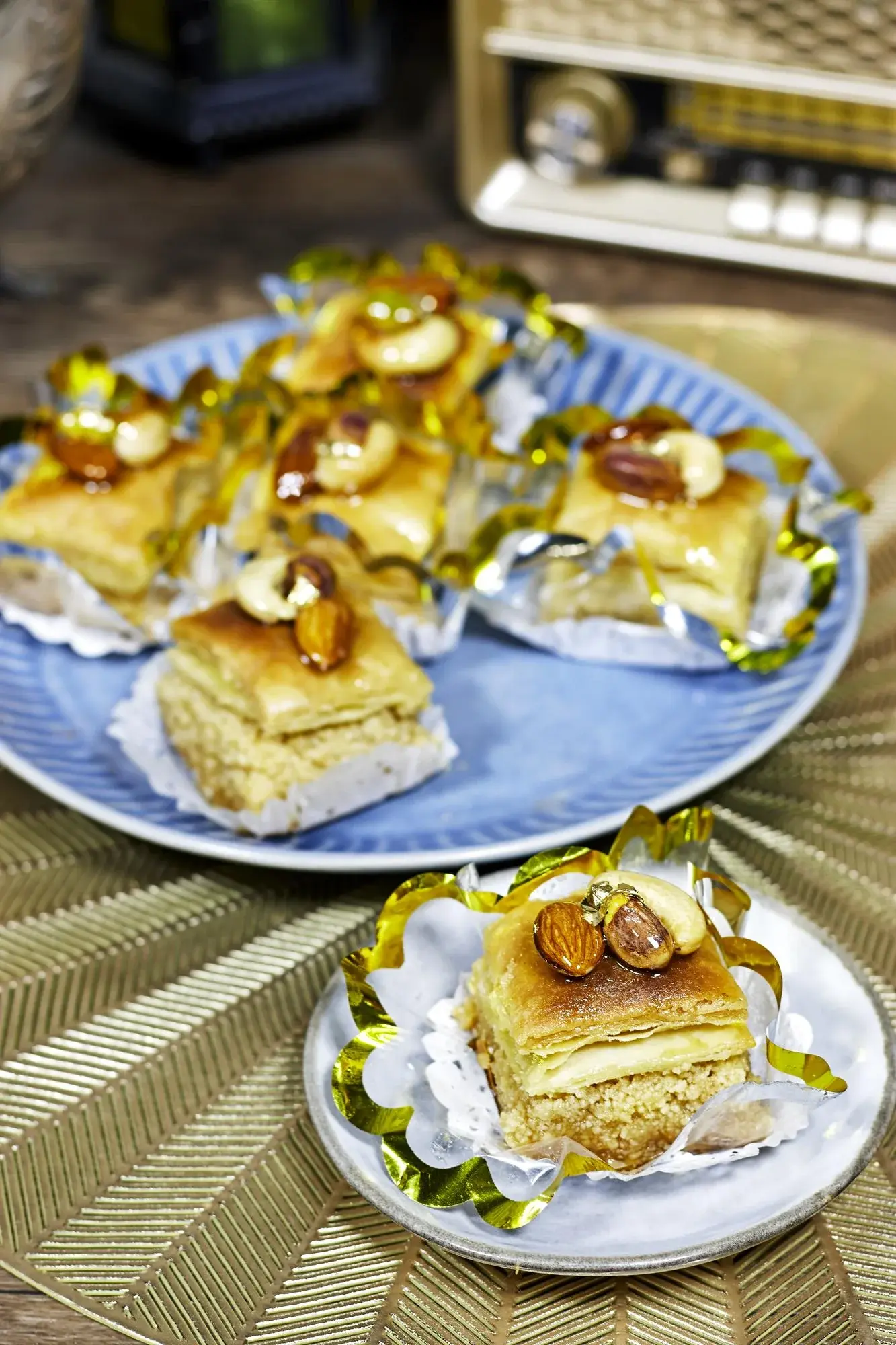
Each of these desserts has its own personality, and all of them deserve a spot on your must-try list.
Baklava (The Syrup-and-Nut Delicacy That Will Impress Absolutely Everyone)
Baklava is arguably the most recognized Mediterranean dessert in the world. Its origin is contested among Turkey, Greece, and several Middle Eastern countries - and that very dispute says everything about its cultural significance.
It is made with thin layers of phyllo dough, filled with chopped walnuts or pistachios, and soaked in honey syrup with a hint of rose water or cinnamon. The result is a combination of textures that seems almost impossible: crispy on the outside, moist on the inside, with a sweetness you taste in every layer but that never overwhelms.
What makes baklava irresistible is its contrast. The pastry is delicate and light. The nuts add depth and natural fat. The syrup binds everything together with that characteristic sheen you see before you even take a bite. One piece is enough to understand why it has held a place at Mediterranean tables for centuries.
Tiramisu (The Classic Coffee Dessert Perfect for a Long, Leisurely Afternoon)
Italy has given the world many wonderful things. Tiramisu is one of the best. This dessert was born in northeastern Italy, most likely in the Veneto region, and since the 1970s it has never stopped winning over tables around the planet.
The base is simple: ladyfinger biscuits soaked in strong espresso, layered with mascarpone cream made with egg and sugar, finished with a generous dusting of bitter cocoa on top. No oven required. No complex technique. And yet the result is a sophisticated, deeply satisfying dessert.
The name says it all: tiramisu means “lift me up” in Italian, a nod to the effect of the coffee and sugar. It is the ideal dessert for a long afternoon, for a family meal that ends unhurried, for that moment when no one wants to leave the table just yet.
Crema Catalana (A Silky Delight That Melts on Your Tongue)
Long before French crème brûlée became famous, Catalonia already had its own version. Crema catalana is one of the oldest desserts in Spanish cuisine, with documented recipes dating back to the 14th century.
It is made with milk, egg yolks, sugar, cinnamon, and lemon or orange zest. The cooking is slow and careful, until a thick, smooth custard forms. Then comes the most satisfying moment: sprinkling sugar on top and torching it until a caramelized crust forms - one that cracks with the very first tap of a spoon.
Crema catalana is a dessert of perfect contrasts. Cold underneath, warm on top. Smooth in the body, crisp on the surface. Delicate in flavor, intense in experience. Try it once and you will want it again and again.
Panna Cotta (Italian Freshness - Ideal for Warm Days)
Panna cotta comes from northern Italy and is proof that simplicity can be brilliant. Its name literally means “cooked cream,” and that is exactly what it is: cream cooked with sugar and gelatin, then chilled until it sets into a firm yet trembling texture.
On its own, it is already delicious. But what makes it memorable is what accompanies it: red berry coulis, liquid caramel, mango, passion fruit, or simply a drizzle of honey and a handful of nuts. Panna cotta is the blank canvas of Mediterranean pastry.
On a warm day, there is very little that can match it. It is light, refreshing, easy to eat, and effortlessly elegant. No oven needed. No complicated ingredients. Just time and good cream.
Greek Yogurt with Honey and Pistachios (The Sweet, Healthy, Effortless Treat)
This is not an elaborate dessert. It is better than that: it is honest. Greek yogurt with honey and pistachios is what you reach for when you want something sweet but do not want to feel weighed down afterward.
Greek yogurt has a dense, creamy texture that comes from straining traditional yogurt to remove the whey. That process makes it higher in protein and less acidic than conventional yogurt. On top: a generous pour of pure raw honey - ideally Greek thyme honey, which is aromatic and floral - and a handful of toasted pistachios for the crunch it needs.
This is the dessert that proves Mediterranean cuisine does not need to be complicated to impress. Three ingredients, five minutes, and you have something that tastes like Greece in every spoonful.
Essential Ingredients for Making These Delights in Your Own Kitchen
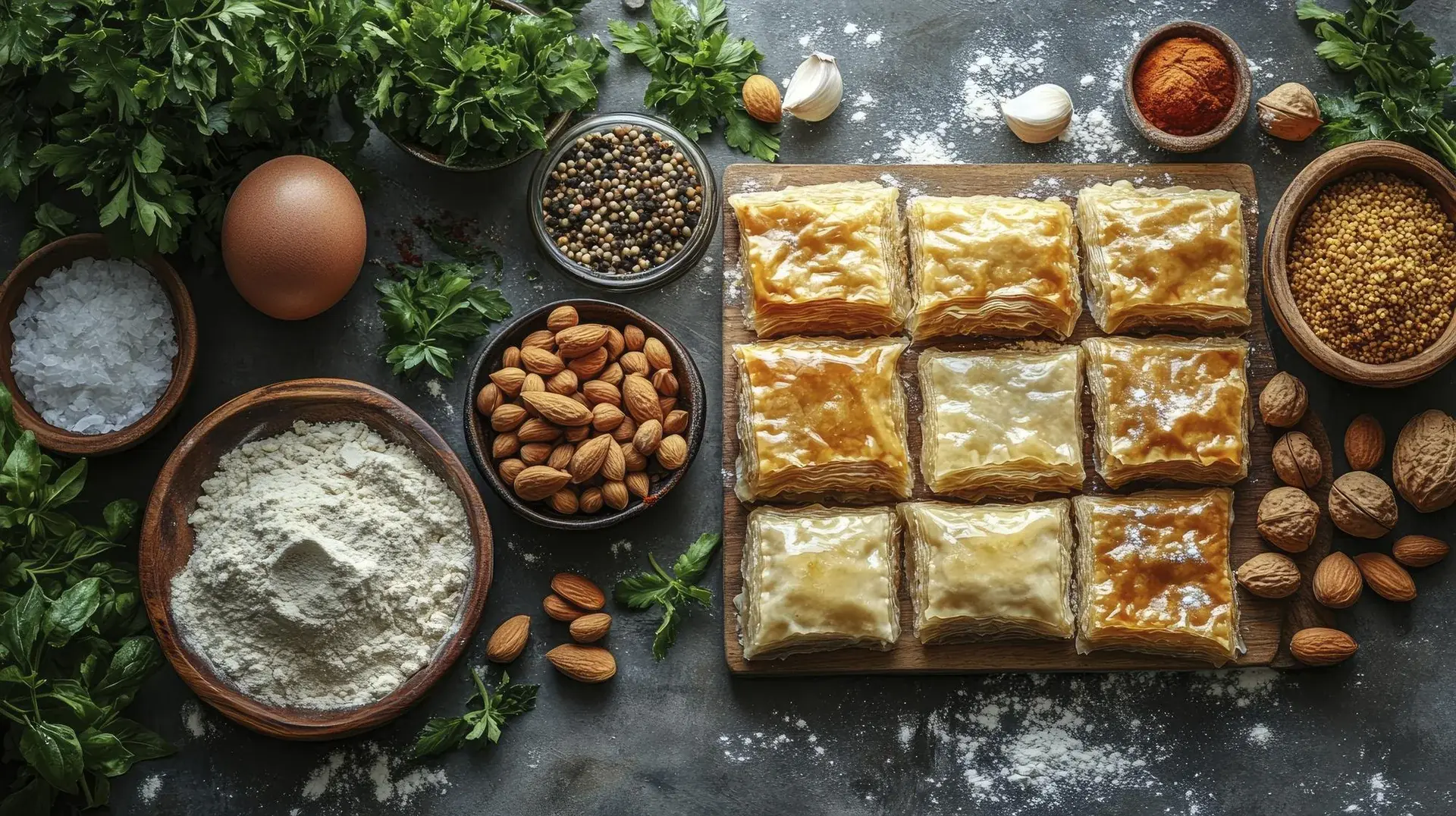
If these Mediterranean desserts have left you wanting to recreate them at home, good news: most use ingredients that are not hard to find. What matters is quality. In Mediterranean cooking, excellence lives in the details.
The Magic Touch of Nuts, Olive Oil, and Citrus
Nuts are the heart of many Mediterranean desserts. Almonds, pistachios, walnuts, pine nuts - each has its own character. Buy them raw if you are going to cook with them, so you can control the final intensity. If you buy them already toasted, make sure they are fresh. Oxidized nuts will ruin any recipe.
Extra virgin olive oil, unusual as it may seem in desserts, is essential in several Mediterranean sweets. It does not taste like olives - instead it adds a smoothness and complexity that no other fat quite achieves. A touch in panna cotta, or in the batter of certain sponge cakes, makes all the difference.
Citrus is the great balancer. Lemon zest, orange juice, grapefruit peel: they bring acidity and aroma to places where there would otherwise be only sweetness. They are not optional garnishes. They are structural.
Pure honey, not corn syrup posing as honey. Fresh spices: Ceylon cinnamon, not the cheap kind. Good-quality milk, preferably whole. And time. In Mediterranean cooking, time is an ingredient like any other. If you are in a hurry, do not attempt tiramisu or baklava.
The beauty of these desserts is that once you have the basic ingredients stocked in your pantry, you can make any of them whenever the mood strikes. And when you taste them made at home, you will understand why people travel thousands of miles just to try an authentic version in its place of origin.
But if you would rather skip the effort and experience authentic Mediterranean desserts prepared with the kind of precision that only comes from years of practice, there is always the option of visiting a Mediterranean restaurant in Medellín where every recipe carries the weight of years of refinement. Because sometimes, the best dessert is the one someone else makes for you with love.